






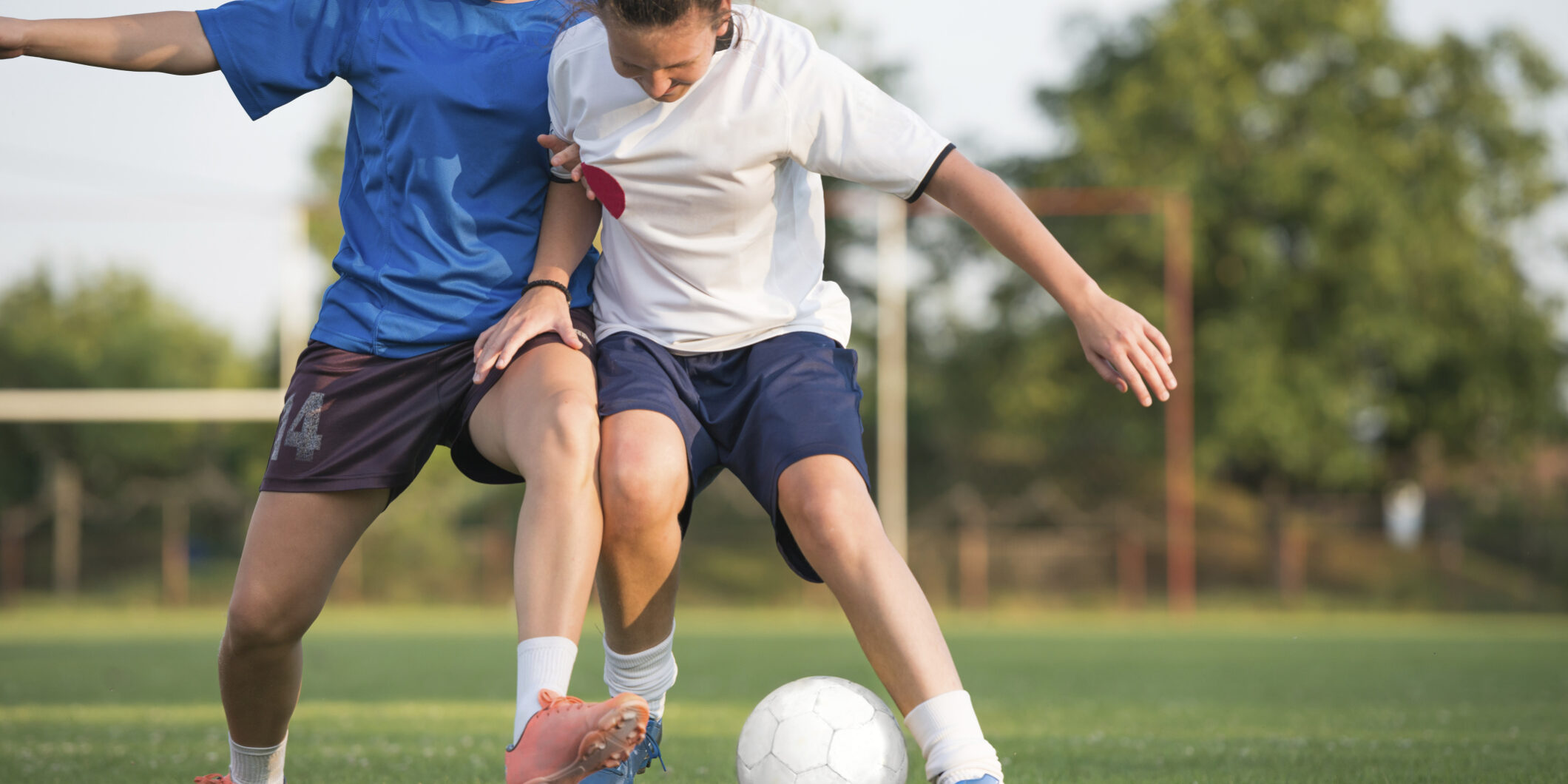
If you are anyway associated with youth sports these days, you have no doubt come across the scourge of youth athletes, especially young girls: the dreaded ACL tear. This week, a fantastic new article in the NY Times by Craig Welch told the heartbreaking story of his own daughter – and 19 of her teammates – who suffered this injury. 19 teammates!
An ACL tear isn’t just a “tough break”—it’s a potentially life-altering injury. Unlike a standard fracture or a sprained ankle, a ruptured ACL typically demands surgery followed by a grueling, year-long road to recovery. But the real kicker? The impact doesn’t end when the brace comes off. These injuries often linger for a lifetime, linked to chronic pain and early-onset osteoarthritis. Some research even suggests a connection to increased cardiovascular risk later in life, likely due to persistent inflammation and the long-term struggle to stay active on a compromised knee.
The article highlighted a well known and worrying trend: ACL injuries are rising faster than ever, and girls are bearing the brunt of it.
Recent data reveals a staggering gap between male and female athletes:
- Higher Probability: Young female athletes are now three to six times more likely to suffer an ACL tear than their male peers. One in six females are likely to tear their ACL, and 1 in 3 of them are likely to have a second ACL tear
- Rapid Increase: Over a recent 15-year period, ACL injury rates among U.S. high school girls surged by 32%—more than double the 14.5% increase seen in boys.
- Widespread Impact: This spike isn’t limited to one sport; it spans a dozen high school athletic programs across the country.
While better diagnosis and increased sports participation play a role, they don’t fully explain why the injury rate per hour played is climbing so sharply for girls. Experts point to a “perfect storm” of factors, including anatomical differences like a wider pelvis, hormonal influences on ligament laxity and more. There is a “gender gap” in sports science and equipment that puts female athletes at a distinct disadvantage. From anatomical differences to outdated training cultures, the deck is often stacked against them. Females have a narrower femoral notch (where the ACL sits) and a wider pelvis create a “Q-angle” that puts significantly more strain on the knees, as well as anatomical differences that cause the knees cave inward during jumps or pivots.
In addition, the apparel industry has treated female athletes as an afterthought. Most girls’ cleats are simply scaled-down versions of men’s shoes. However, female feet are shaped differently and absorb force uniquely; wearing an improperly fitted “men’s” shoe can actually exacerbate ankle rolls and shin strain.
Finally, proper strength training is one of the most effective ways to support the ACL, yet girls are often introduced to lifting much later than boys. Many coaches still train female athletes using programs designed for male bodies, failing to address the specific neuromuscular needs required to protect female joints. And its this last point I want to address.
For over two decades now, we have had preventative programs that have shown a dramatic decrease in ACL injuries. The first program arising out of Santa Monica, California, reduced ACL and associated injuries by two-thirds in its first study of 3,000 female soccer players simply by performing a 20 minute mobility, strength and balance warm up 3x per week. When the study was repeated a year later, it showed the same results.
Today, despite numerous additional programs similar to the Santa Monica program, such as the FIFA 11 Plus, ACL injuries continue to rise. Why? Today’s youth are facing a movement “perfect storm.” On one hand, we’ve lost the unstructured free play—the jungle gym scrambles and backyard tag—that naturally builds a strong core and intuitive agility, and replaced it with sport-specific training or time on the couch scrolling through social media and playing video games.
In addition, we’ve traded sport sampling for early specialization. Instead of rotating through soccer, basketball, and softball, more kids are sticking to a single sport year-round. Without seasonal breaks or diverse movements, they miss out on well-rounded athleticism and put repetitive stress on the same joints. Parents feel the pressure to keep signing their children up for year-round sports lest they lose their position on the team. As a result, these sport-specific children do not become athletes first and soccer players or volleyball players second. When they hit their growth spurt, these muscular imbalances are exacerbated, and the lack of balanced athletic development and proprioception makes them more susceptible to injury.
Playing a variety of sports and have a multi-movement childhood isn’t just about having fun—it’s a strategic move for long-term health and athletic success. Here are the core benefits of being a multi-sport athlete, which I have written about numerous times:
Physical & Performance Advantages
- Reduced Injury Risk: Rotating sports or participating in multi-movement activities prevents overuse injuries by giving repetitive-motion muscles a break while strengthening “stabilizer” muscles.
- Superior Athleticism: Exposure to different movements creates a more well-rounded, adaptable athlete who is less susceptible to injury.
- Improved Motor Skills: Diverse sports challenge the brain and body to master varied neuromuscular patterns, which can actually enhance performance in a “primary” sport later on.
- Better Conditioning: Different disciplines target varied muscle groups and energy systems, improving overall strength, explosive power, and endurance.
Mental & Emotional Growth
- Burnout Prevention: Seasonal variety keeps sports fresh and exciting, significantly reducing the risk of mental fatigue and the “chore” mentality often seen in year-round specialization.
- Increased Resilience: Facing different types of pressure and competitive environments helps kids develop grit and the ability to handle both success and failure.
- Social Intelligence: Playing on different teams exposes athletes to a wider range of coaching styles and teammate dynamics, building strong communication and leadership skills.
- Lifelong Fitness: Kids who sample many sports are more likely to find a passion they truly enjoy, leading to healthy habits that continue well into adulthood.
The Elite Performance Benefits
- Elite Backgrounds: A massive majority—roughly 88% to 96%—of drafted NFL players and nearly 100% of NHL players were multi-sport athletes in high school.
- Strategic Advantage: Many college coaches actively recruit multi-sport athletes because they are often more coachable, creative, and physically literate
This is not simply an athletic performance issue or an orthopedic issue. I believe this ACL epidemic is a human rights issue, especially for our young girls playing sports. We have proven solutions that work when coaches start treating them as a mandatory part of practice that needs to be coached and observed, and not an afterthought. Or, as one coach in the article stated, we have safe sport training and concussion awareness. Why are we not training our coaches to do ACL prevention exercises every single practice?
I will finish with this. These programs have been around for over two decades now, with proven results. As a club soccer coach for a large majority of that time, I incorporated these and similar movements into all of my team warmups. Over a combined 15 years of coaching girls’ teams since 2006, sometimes coaching two teams at a time, while incorporating these programs I had a grand total of one ACL injury on my teams. That is correct: one ACL injury. I coached approximately 80 girls between the ages of 11 and 17 with one ACL injury. Sadly, amongst the same population of kids, I can think of six ACL injuries off the top of my head when these girls were playing high school soccer or another sport without preventative training incorporated into every practice.
So as I step off my soapbox, I call upon coaches to look at the evidence and please start incorporating proper ACL prevention warm-ups into your sessions for both your female and male athletes. To parents, advocate for your kids. Demand that the clubs you are paying thousands of dollars to every year keep your kids safe. Demand that your high school coaches are trained and observe these simple activities so that your kids stay healthy, not just for this season but for their entire lives.
I don’t think that’s too much to ask. Do you?
(Here is a link to the FIFA 11+ as provided with demo videos by a medical provider. Google FIFA 11+ for further resources, downloadable PDFs, etc)


Comments